In Defense of Gacha in Mobile Games
This article was automatically translated from Japanese by AI. Read the original Japanese version →
Table of Contents
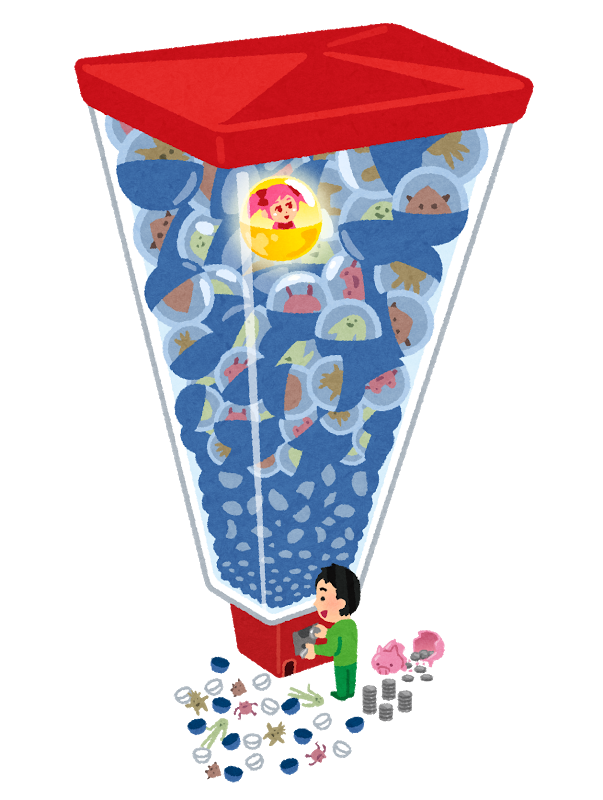
First, take a look at the post below. The conclusion is essentially "gacha is gambling and needs to be regulated," and it lays out the reasons at length. For the most part, I agree.
However, I still believe that card games—especially trading card games (hereafter TCGs) like Yu-Gi-Oh!—genuinely need an element of randomness. And I think social games probably need randomness for the exact same reasons. In this post, I'll explain why.
Keeping Things from Getting Stale
Fundamentally, randomness in games is a mechanism for creating variety in gameplay. For example, in a TCG sold in 10-card packs, Player A and Player B can each buy 3 packs (30 cards) and end up with completely different collections. If they're lucky enough not to pull any duplicates, that's 60 different cards between the two of them. Then Player A and Player B play a match. Because they hold different cards, they naturally end up using completely different strategies. Being "forced to fight in a different way from everyone else" is what makes TCGs fun. It keeps the game from getting stale. Playing against lots of different people stays fun indefinitely, and even if there were only two people in the world, trading cards back and forth would keep things interesting for a long time.
Discovering Synergies
Next is the fun of combining cards. Cards aren't just strictly better or worse than one another—there are all kinds of archetypes: cards with low attack but low cost, cards whose effects only trigger for a specific attribute, and so on. A card that's weak on its own can become surprisingly powerful when paired with the right partner. Hunting for those synergies is part of the charm of card games, and having players start with different card pools creates far more opportunities to stumble across them (and gives players a great reason to talk and interact with each other).
Trading Cards
Then there's the joy of trading. If one of your cards forms a killer combo with one of your friend's cards, you'll want to work out a trade. That kind of social interaction is the heart and soul of a TCG—that's literally why it's called a trading card game. Before anyone jumps in to point it out: yes, trading items is banned in almost all social games. I cynically suspect that's because issues around real-money trading left operators with little choice but to prohibit it.
Summary
To sum up, there are genuine game-design reasons why card games distribute cards randomly. In my view, the current state of gacha came about because players turned out to be more foolish than developers originally expected—and once studios saw the undeniable truth that "this prints money," everyone jumped on the bandwagon. I'll leave off with an old tweet of mine.
I'll say this as many times as it takes: games with gacha are meant to be enjoyed by building decks and adapting your playstyle around whatever items you happen to pull. Spinning the gacha chasing one specific item is just playing the game wrong.
— kazasiki (@kazasiki) December 8, 2017