
Thoughts on Reading "Bullshit Jobs: A Theory"
This article was automatically translated from Japanese by AI. Read the original Japanese version →
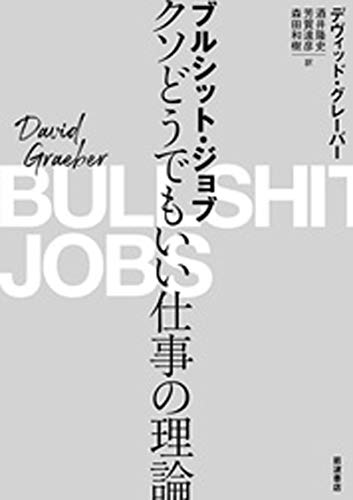
Bullshit Jobs: A Theory (Japanese Edition)
- Author: David Graeber
- Release Date: 2020/12/24
- Format: Kindle Edition
I listened to it on Audible. Rather than an introduction to the book, this post is more like my reading notes.
Here is the definition of a bullshit job laid out in the book:
A bullshit job is a form of paid employment that is so completely pointless, unnecessary, or pernicious that even the employee cannot justify its existence even though, as part of the conditions of employment, the employee feels obliged to pretend that this is not the case.
The book isn't about blaming the people working bullshit jobs or telling everyone to boost productivity; instead, it focuses on what bullshit jobs are and aren't, and what kinds of problems they create. What's interesting is how it takes a compassionate look at the psychological toll and burden placed on people stuck in bullshit jobs. One of the primary problems of a bullshit job is the mental anguish experienced by the person doing it.
You can read a Japanese translation of the original essay that inspired this book in the article below. You can get the general gist from that article alone.
The book itself is packed with interviews from people saying "I definitely have a bullshit job!" along with statistical survey data, making it quite convincing. It also goes on at length about ethical and theological angles, so readers not well-versed in those areas might find those sections a bit dry. While the theological arguments mainly focus on Christianity, the idea of treating labor as a virtue is something Japan shares as well, giving you plenty to think about.
Personally, I found it amusing that (strictly as one opinion from the interviews) even doctors were described as having a bullshit job—that in practice, doctors have basically become vending machines for medicine. The argument was that increases in average life expectancy owe more to improvements in public sanitation than medical advances, meaning garbage collectors contribute much more strongly to public health than doctors do. That kind of perspective is pretty fresh and entertaining.
As a potential solution to the bullshit jobs problem, the book brings up basic income. Even so, the author doesn't think basic income is a silver bullet, only going so far as to say that "basic income has the potential to solve the problem of bullshit jobs."
What I found particularly interesting was how basic income was discussed in connection with feminism—specifically the debate over domestic labor. I don't know too much about movements like "Wages for Housework!", but one aspect is clarifying the market value of housework primarily done by stay-at-home spouses. Another aspect is that when only the husband earns a wage in a marriage, a wife trapped in an unhappy marriage or domestic abuse has her financial freedom severely restricted.
Following that line of thought, there were calls for governments or local municipalities to directly pay homemakers a fair wage for their labor. However, stay-at-home spouses aren't the only ones doing housework—everyone does at least some domestic work. So if you end up paying wages for housework, its nature becomes very close to a basic income, which is a fairly persuasive point.
The author, David Graeber, is an anarchist. In response to the counterargument that basic income would strengthen the power of the state, he flatly rejects it. With universal basic income, even if the government has the authority to adjust the payout amount, it doesn't choose who receives it. As a result, agencies that process applications for subsidies or financial aid and screen applicants become unnecessary, which in turn reduces government power.
I loved the blog post and essay linked above and used to recommend them to people every chance I got. I'm really glad it turned into a full book with analysis and supplementary details from so many angles. Definitely pick up a copy and give it a read.