
Memories of Jigsaw Puzzles
This article was automatically translated from Japanese by AI. Read the original Japanese version →
Lately I've been spending most of my gaming time in the VR jigsaw puzzle game Puzzling Places. I won't be reviewing the game itself in this post—instead, playing it brought back some childhood memories that I felt like writing down.
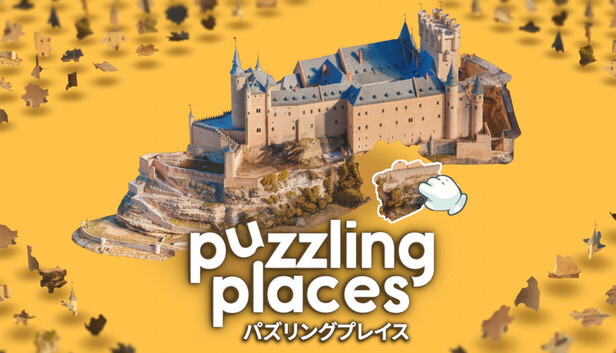
My mother loves jigsaw puzzles. When I was a kid, we often worked on them together, and I liked them quite a bit myself. I don't remember the exact piece counts, but even as a little kid I used to plug away diligently at puzzles with surprisingly tiny pieces.
Naturally, we had a jigsaw puzzle frame at home. Since a frame that size gets in the way pretty badly, though, we'd only set it out on the low table in the living room while actively working on the puzzle, and whenever it was time to eat, we'd carry it over to a corner of the room. We had to carry it super carefully so the pieces we'd sorted by color wouldn't get mixed back up. Looking back, I don't think we ever actually hung up a single finished puzzle, so that frame really just served as a very fancy serving tray.
There's a kind of unspoken etiquette to jigsaw puzzles: the moment you open the box, you hunt for the four corners and the edge pieces—the ones with a completely flat side—and build the outer border first. Even a kid can handle that part fairly easily, so sometimes I'd just help out with the edges. It felt like a little ritual at the start of every new puzzle, and I remember feeling genuinely excited as we did it.
Not that it's really cheating, but I remember getting scolded once for staring too closely at the picture on the box while solving a puzzle—apparently that was "unfair." The proper way to play, I was told, was to rely on your memory of glancing at the picture at the start and work from the colors of the pieces. Even today, whenever I do a jigsaw puzzle, I still find myself following that rule(?). Thinking about it now, it's basically a self-imposed challenge mode for veterans, though I guess the point is that if you're playing for the joy of figuring things out, there's no sense in taking shortcuts.
Jigsaw puzzle boxes are big and bulky, and once you finish one, you almost never open it again. So the routine at our house was to sell them off on Yahoo! Auctions once we were done—this was before Mercari existed. At its worst, I remember boxes stacked all the way from the floor to the ceiling. Dealing with listing and shipping them was all my mother's job, while I just watched thinking how much work it looked like.
There was also a PlayStation game called Jigsaw World that my family used to play a lot together. (Apparently there's even a Steam version now, though it has zero reviews...)
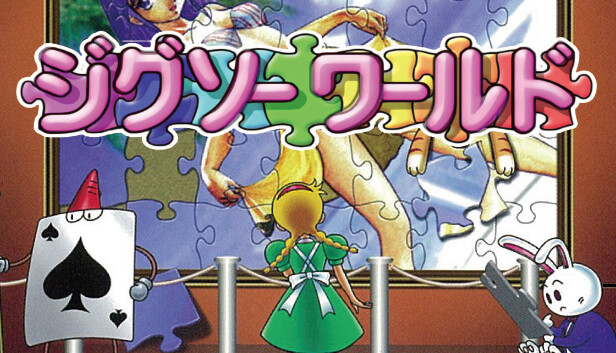
It had co-op, versus, and even a story mode. Versus mode had attack/sabotage mechanics that got pretty heated, and even co-op displayed how many pieces each player had placed, making it a fun blend of cooperation and friendly competition. My mother wasn't really into that one, so I mostly played it with my older sister.
Human perception is a funny thing—the exact piece you're looking for is always the one you can't find. You start searching convinced a piece has such a distinctive pattern it'll jump right out at you, give up and move on to another section, and then, while doing something completely unrelated, spot the piece you were hunting for out of nowhere. That's just how jigsaw puzzles go, and maybe those experiences taught me how to make peace with the limits of my own attention and perception.
Still, I can't deny there's something a little surreal about buying an expensive gaming PC and a VR headset only to use them to do jigsaw puzzles.