
On How Audio Quality in Everyday Life Is Gradually Declining
This article was automatically translated from Japanese by AI. Read the original Japanese version →
I previously wrote the following post.
Thinking about it again, I get the feeling that the audio quality we listen to music in everyday life has actually been gradually declining.
When I first started using a smartphone, I listened to FLAC files ripped from CDs using wired earphones. Since FLAC is a lossless codec, there is virtually no degradation in sound quality. Anyone who recognizes the FLAC format can probably tell, but I was using an Android smartphone. At first I used Winamp for Android, and when development was unfortunately discontinued, I switched over to Poweramp.
Poweramp Music Player (Trial) - Apps on Google Playplay.google.com
Later, when I started using Google Play Music, I began converting my files to 320kbps MP3s, because that was the highest format Google Play Music supported. That capped my upper bitrate at 320kbps. Since FLAC was effectively CD quality, the audio quality had already dropped quite a bit by this point. Still, I wanted to put all my data in the cloud so I could get rid of the mountain of CDs piling up at home, and being able to play them freely from any device was appealing, so I made the switch to Google Play Music. (Nowadays, Google Play Music has shut down and become YouTube Music.)
After that, I gave up wired earphones and switched to Bluetooth earphones. The pair I bought back then was the MDR-EX31BN, and I'm still using it today. It supports the aptX codec, so I don't think there's much degradation when listening to 320kbps audio. However, from that point on, even if I switched music services again and went back to FLAC, I wouldn't be able to enjoy its full capability anyway.
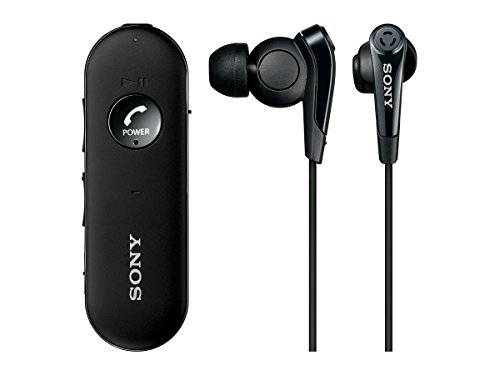
Right now, since Google Play Music is scheduled to shut down, I've migrated to YouTube Music (Premium). At the same time, I'm also using Spotify. When streaming on PC, I listen at high quality: 256kbps on YouTube Music and 320kbps on Spotify. When listening on my smartphone, I usually download the tracks, so it's the same audio quality.
The reason Google Play Music, YouTube Music, and Spotify stick to around 320kbps is probably because, unlike video, buffering (waiting for tracks to load) in a music service is unacceptable for the user experience. Assuming a smartphone mobile connection, streaming formats that require even more data would be tough in the first place. Plus, nowadays everybody and their dog uses Bluetooth earphones, so even if you offered audio higher than 320kbps, that extra fidelity would almost never come through anyway.
Given all this, major subscription music services probably won't support FLAC or ALAC anytime soon. So if we want to enjoy high-quality music again, we have to buy CDs or purchase audio from services that support the FLAC format like Bandcamp. And then we also have to worry about whether to store those files on a home HDD or in a cloud service like Dropbox.
Also, if you want to enjoy the full detail of that audio without loss, Bluetooth probably won't cut it for a while. There is a codec called LDAC that supports hi-res (or so Sony says), but honestly you can't really say it's widespread yet. And then there's the question of whether we can even go back to wired earphones now.
Just like video progressed from HD → Full HD → 4K, I used to think listening to music in hi-res would become the norm. Instead, things haven't gone that way at all, leaving me with a bittersweet feeling of "So that's the choice humanity made..."—which is what prompted me to jot down these rambling thoughts. That said, I do think it's great that subscription services like Spotify are creating all sorts of new ways to enjoy music, and I happily use them myself.
P.S.
I do know about Amazon Music HD, though I haven't tried it since I'm not sure what its song catalog is like.