
Products That Caught My Eye at CES 2025
This article was automatically translated from Japanese by AI. Read the original Japanese version →
Table of Contents
Today I'd like to casually introduce some products that caught my eye at CES 2025, one of the world's largest consumer electronics and technology trade shows, recently held in Las Vegas.
I didn't actually attend in person, of course, but thanks to online media and YouTube, it's easy to gather plenty of information these days. For the product descriptions themselves, I had Gemini quickly draft a baseline and tweaked it a bit, so I'll paste those in as blockquotes.
What Is CES 2025?
CES (Consumer Electronics Show) is one of the world's largest consumer electronics and technology trade shows, held every January in Las Vegas, Nevada, USA. As a venue where companies from around the globe unveil their latest technologies and products, it draws huge attention not only from industry insiders but also from everyday consumers. In recent years, it has expanded well beyond home appliances to showcase cutting-edge technologies across a wide range of fields, including automotive, AI, IoT, and space tech.
Notable Product Highlights
From here, let's casually go through the products unveiled at CES 2025 that caught my attention.
1. Mudra Link

Mudra Link is a wearable device worn on the wrist that lets you intuitively operate a variety of devices. By detecting finger movements with advanced sensors and recognizing them as gestures, it can control smartphones, tablets, smart TVs, and more. It offers a completely new way to interact, replacing traditional controllers and touch controls. For instance, just a light finger tap lets you play or pause music, adjust volume, or switch apps.
As I've mentioned on this blog before, I sometimes control my PC with a Steam Controller. *1
I spend a fair amount of time wanting to control things in midair while sitting more than 2 meters away from my screen or desk, and a conventional keyboard and mouse just don't work in those situations. Also, I bought a large Google TV last year, and I feel the included remote leaves something to be desired in terms of usability. I'd been keeping an eye on Mudra Link as a product that might solve those exact issues, so I'm really excited that pre-orders have finally opened.
Once shipping starts, there should be plenty of reviews of the final retail version, and if the reception is good, I plan to pick one up myself.
2. Razer Project Arielle
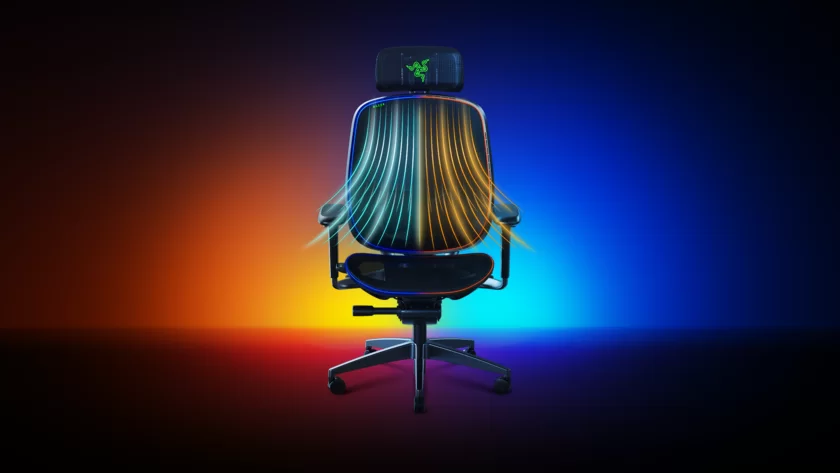
Razer Project Arielle is the world's first mesh gaming chair equipped with temperature control. A bladeless fan system built into the backrest efficiently blows and draws air to adjust your perceived temperature—keeping you cool when it's hot and warm when it's cold. In dry environments in particular, it can lower perceived temperature by up to 5°C. It also includes a built-in heater capable of delivering warm air up to 30°C so you can stay comfortable even in colder seasons.
Since I use a standing desk and barely ever sit for long stretches, this isn't really a product for me personally, but I thought the concept was fun. I imagine plenty of people already keep a fan or space heater near their desk to regulate temperature, so building that functionality right into the chair for comfortable gaming seems pretty spot-on.
The biggest concern is having to plug in a power cable, though as I just mentioned, lots of people probably already have appliances around their chair anyway, so I doubt it'll be that huge of a deal.
3. Legion Go S
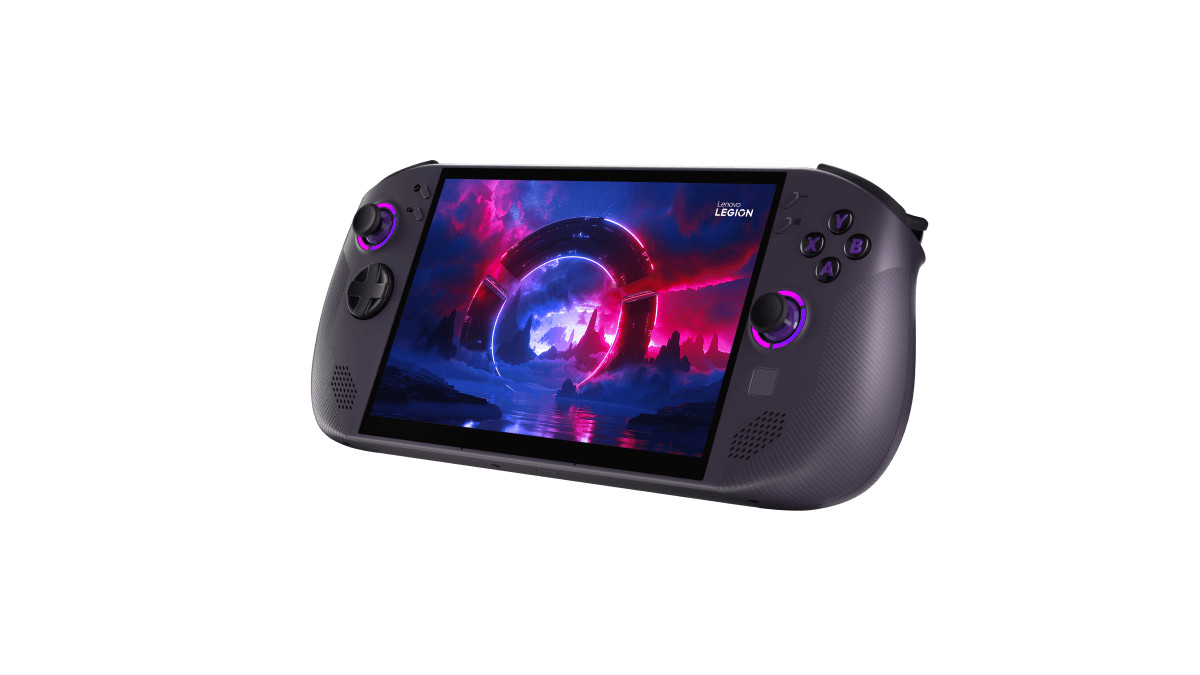
The Legion Go S is a portable gaming PC that balances portability with high performance. Powered by SteamOS, it lets you enjoy a huge range of games from your Steam library on the go. Equipped with a high-performance CPU and GPU, it can run even the latest titles comfortably. Plus, its high-resolution display and punchy sound system deliver an immersive gaming experience. The Legion Go S looks set to be one of the top choices for gamers who want full-fledged gaming anywhere.
The standout feature of this gadget is definitely that it ships with SteamOS. Most portable gaming PCs other than the Steam Deck come with Windows 11, and when you think about menu navigation as a handheld console and the reliability of sleep mode, SteamOS still has the clear upper hand right now. On top of that, simply bundling Windows 11 tends to push the market price up by around 10,000 to 15,000 yen, so it's welcome news on the pricing front too.
I already own the OLED version of the Steam Deck so I don't expect to replace my handheld PC anytime soon, but as a PC gamer, it's genuinely heartwarming to see more devices running SteamOS.
4. High-Refresh-Rate Gaming Monitors
At CES 2025, numerous manufacturers announced high-refresh-rate gaming monitors. Refresh rate measures how many times a screen updates per second—the higher the number, the smoother the motion. Lately, ultra-high-refresh-rate monitors exceeding 240Hz have arrived, letting you play fast-paced games with minimal motion blur and crisp visuals. Improvements in resolution and HDR support have also elevated visual fidelity, making game worlds feel even more vivid and lifelike.
Looking at the gaming monitors announced across various brands lately, the pace of spec inflation feels staggering. High-resolution, large, high-refresh-rate displays are becoming commonplace, and while higher specs naturally come with higher prices, growing adoption seems to be gradually bringing more affordable models into the mix too.
I just bought a 40-inch 4K display recently, so upgrading right away would be tough, though I do want a large 120Hz monitor and am hoping to upgrade sometime next year. In practice there isn't much high-refresh-rate content outside of games, but even when watching videos on YouTube or Netflix, playing 60Hz footage at 2x speed works out to 120Hz—so I actually think there's an unexpected benefit there.
5. Nvidia GeForce RTX 50 Series

The Nvidia GeForce RTX 50 series is the next generation of graphics cards built on the latest architecture. Delivering a substantial performance leap over the previous generation, it enables gaming at even higher resolutions and frame rates. Cutting-edge features like ray tracing and DLSS have also evolved for more realistic visuals. The RTX 50 series promises to be a powerhouse not only for gamers, but also for creators, dramatically boosting efficiency in tasks like video production and 3D modeling.
Just as everyone predicted, Nvidia announced its new GPUs. Official performance numbers are never super reliable so I'll wait for post-launch reviews for the finer details, but the big takeaways for me were that the 5080 and lower tiers are surprisingly reasonable in price, and that the flagship 5090's power draw has finally hit the 1000W mark. That's microwave or toaster-oven territory.
I upgraded to an RTX 4080 two years ago so I don't plan to upgrade again for another 2–3 years, though I'm curious what kind of experience it offers alongside the higher-spec gaming monitors mentioned above. Also, running generative AI locally is becoming more of a trend lately, and I suspect we'll see more real-time assistant features that reference local PC context (like screen state and input actions), so I'm interested to see how that plays out too.
6. inkposter

inkposter is a large, poster-sized color e-paper display. Compared to conventional e-paper, its color reproduction has improved dramatically, enabling vivid full-color visuals. Its power consumption is extremely low, using no electricity at all just to maintain a static image. This makes it promising for advertising, digital signage, art exhibitions, and more. Because it's easy to update, it's also handy when you want to change what's displayed frequently.
People often say Japanese households don't tend to hang paintings on their walls, and I think color e-paper has the potential to completely change that. Color e-paper itself has been around for a while, of course, but its color reproduction wasn't great—fine for reading books, maybe, yet honestly too rough for displaying artwork. This product, though, produces colors at a genuinely watchable level, sips power, and from the demos, controlling it via the app looks smooth enough.
If you try doing the same thing with an LCD screen, the colors look great, sure, but because it emits light it disrupts the mood of a room, draws lots of power, and has to stay plugged in all the time. According to the info on this product, a single charge lasts about a year.
The biggest hurdle is price, though I'd like to think that'll settle down once production scales up (wishful thinking). It could also double as a giant digital photo frame, and overall it feels like a very practical piece of tech—so if the price gets a bit more approachable, I'd definitely love to buy one.
Summary
And that wraps up the CES 2025 products that caught my eye. Plenty of other interesting devices beyond what I mentioned here were announced too, so definitely go check out other tech outlets and YouTube videos as well.